Working With Unrepresented Parties Without Creating Accidental Agency
In the fast-paced Washington real estate market, brokers frequently encounter buyers who choose to navigate transactions without their own broker. While working with an unrepresented buyer can lead to a successful transaction, it also introduces significant legal and regulatory risks. Under Washington law, brokers must walk a fine line: they must provide honest, fair service to the unrepresented party while fiercely protecting the interests of their own client, usually the seller. Missteps in communication can easily lead to "accidental agency," a situation where the buyer believes you are representing them, creating a conflict of interest and a violation of state licensing laws.
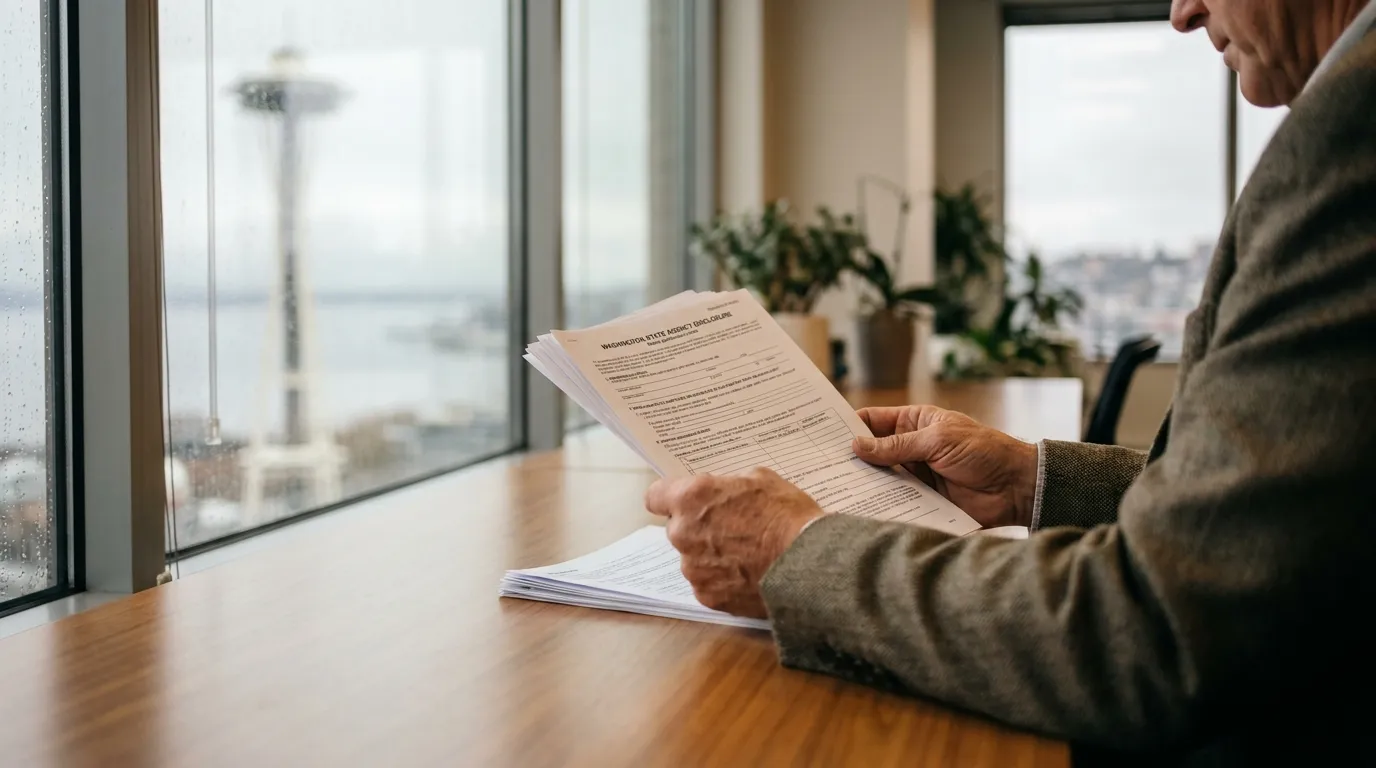
Navigating these interactions requires a deep understanding of the Washington Real Estate Agency Law (RCW 18.86). As a broker completing your first renewal cycle, mastering these boundaries is critical to protecting your license and your managing broker from costly disputes. To ensure you are fully prepared for these complex scenarios, enrolling in the comprehensive Washington 90-Hour First Renewal Package will provide you with the mandatory coursework, including the required Core and Advanced practices, to keep your license active and compliant.

Duties Owed to All Parties in Washington
Under Washington law, specifically RCW 18.86.030, real estate brokers owe a specific set of statutory duties to all parties in a transaction, regardless of who they represent. These are often referred to as the "general duties" and must be adhered to strictly when interacting with an unrepresented buyer. Understanding these duties is the first step in fulfilling your professional obligations without crossing the line into representation.

The duties owed to all parties include:
- Reasonable care and skill: You must perform your duties with the professional competence expected of a licensed broker.
- Honesty and good faith: You must be truthful in all dealings and avoid misleading statements.
- Presenting all written communications: You must timely present all written offers, counteroffers, and other written communications to and from the parties.
- Disclosure of material facts: You must disclose all existing material facts known to you that are not apparent or readily ascertainable to a party.
- Accounting: You must timely account for all money and property received in the transaction.
- Providing an agency pamphlet: You must provide the prescribed law of real estate agency pamphlet to any party to whom you render real estate brokerage services.
It is vital to remember that fulfilling these duties does not establish an agency relationship. You can find the complete, official text of these statutory duties directly on the Washington State Department of Licensing website.
The Line Between Assistance and Representation
The core challenge when dealing with an unrepresented buyer washington broker duties scenario is distinguishing between ministerial acts (assistance) and fiduciary acts (representation). You are permitted to assist an unrepresented buyer with administrative tasks, but you must never provide them with advice, advocacy, or negotiation strategies. Doing so creates an implied agency relationship, which is a violation of your written agency agreement with your seller.
Permissible ministerial acts include showing the property, providing factual information about the home's features, explaining the mechanics of the purchase and sale agreement, and filling in the blanks of an offer at the buyer's explicit direction. However, you cross the line into representation the moment you advise the buyer on what price to offer, interpret contract contingencies in a way that favors the buyer, or negotiate on their behalf. Always remind the buyer that your loyalty lies solely with the seller, and any information they share with you will be disclosed to your client.
Disclosure Timing and Forms
In Washington, clear communication begins with timely, written disclosures. You must disclose in writing whom you represent before any party signs an offer in a transaction. This disclosure is typically handled through the "Agency Disclosure" section of the purchase and sale agreement, but best practices dictate making this clear much earlier in your interactions.
When you first meet an unrepresented buyer—such as at an open house or a private showing—you should provide them with the Washington Law of Real Estate Agency pamphlet. Along with the pamphlet, it is highly recommended to have them sign a "No-Agency Relationship" disclosure. This document explicitly states that you represent the seller, that you do not represent the buyer, and that the buyer is choosing to remain unrepresented. Having this signed document in your file is your strongest defense against future claims of accidental agency.
Scripts that Keep the Relationship Clear
Verbal clarity is just as important as written disclosures. Unrepresented buyers often ask questions that tempt brokers to give advice. Having pre-prepared, professional scripts allows you to maintain boundaries politely and firmly. Here are a few scenarios and scripts to use in your daily practice:
When the buyer asks: "What do you think I should offer?"
Your response: "As the listing broker, my loyalty is to the seller, so I cannot advise you on what price to offer. I can provide you with recent sales data for the neighborhood, but the decision on what to offer is entirely up to you. If you want professional advice on pricing, I recommend hiring a buyer's broker or an appraiser."
When the buyer asks: "Do you think the seller will accept this contingency?"
Your response: "I can certainly present any contingency you write into your offer to the seller. However, because I represent the seller, I cannot advise you on how to structure your terms to make them more appealing. My job is to get the best possible terms for my client."
When the buyer starts sharing personal financial details:
Your response: "Before you share any confidential information with me, I want to remind you that I represent the seller. Under Washington law, I am obligated to share any material information you tell me with my client if it could affect their negotiating position. Please keep that in mind as we discuss the transaction."
File Documentation and Risk Mitigation
If a dispute arises, your transaction file is your shield. When managing an unrepresented buyer, you must document every interaction with meticulous detail. Do not rely on memory; write down what was said, when it was said, and who was present.
Keep a log of all emails, text messages, and phone calls. Confirm important verbal conversations with a follow-up email. For example, after a phone call where you declined to give advice, send a quick email stating: "Thank you for your time on the phone today. As discussed, because I represent the seller, I cannot advise you on the inspection response, but I have forwarded your request to my client for their review." Ensure all signed agency pamphlets and no-agency disclosures are uploaded to your firm's transaction management system promptly.
Mastering these risk-reduction strategies is a core focus of the continuing education required for your first license renewal. To ensure you meet all state guidelines seamlessly, consider enrolling in the Washington 90-Hour First Renewal Package, which covers these critical liability topics in depth.
Frequently Asked Questions
Can I write up an offer for an unrepresented buyer?
Yes, you can physically fill out the purchase and sale agreement forms for an unrepresented buyer, but you must act strictly as a scribe. You must fill in the blanks exactly as directed by the buyer without offering advice on terms, prices, or contingencies. You must also ensure they sign a disclosure acknowledging that you are acting solely as the seller's agent.
What happens if I accidentally create an implied agency?Creating an implied agency with a buyer while representing the seller results in undisclosed dual agency, which is illegal in Washington. This can lead to disciplinary action by the Department of Licensing, loss of your commission, and potential civil lawsuits from both the buyer and the seller for breach of fiduciary duties.
Do I have to present an offer from an unrepresented buyer?Yes. Under your statutory duties to all parties (RCW 18.86.030), you are required to timely present all written offers, counteroffers, and other written communications to and from the parties, regardless of whether the buyer is represented or not.