The Washington Consumer Protection Act and Real Estate Brokers
Navigating the legal landscape of real estate in Washington State requires a firm grasp of statutory duties, contractual obligations, and consumer safety legislation. Among the most impactful laws governing commercial conduct is the Washington Consumer Protection Act (CPA), codified in Revised Code of Washington (RCW) Chapter 19.86. While real estate licensees are primary subject to the specific licensing statutes under RCW 18.85 and agency law under RCW 18.86, the CPA extends broad civil liability to unfair or deceptive practices that harm the public.

For real estate brokers, understanding how the CPA intersects with daily practice is critical for mitigating legal risk. Misleading advertising, failing to disclose material defects, or making inaccurate representations regarding property boundaries can easily trigger a Consumer Protection Act claim. Licensees completing their mandatory post-licensing education must be well-versed in these risk areas. For those preparing for their first license renewal, enrolling in the Washington 90-Hour First Renewal Package offers structured instruction on legal duties, risk management, and statutory compliance.

What the CPA Prohibits in Real Estate
The Washington Consumer Protection Act broadly prohibits "unfair methods of competition and unfair or deceptive acts or practices in the conduct of any trade or commerce." Unlike traditional common law fraud, establishing a violation under the CPA does not always require proving that a broker acted with intent to deceive. A practice is considered deceptive if it has the capacity to deceive a substantial portion of the purchasing public.
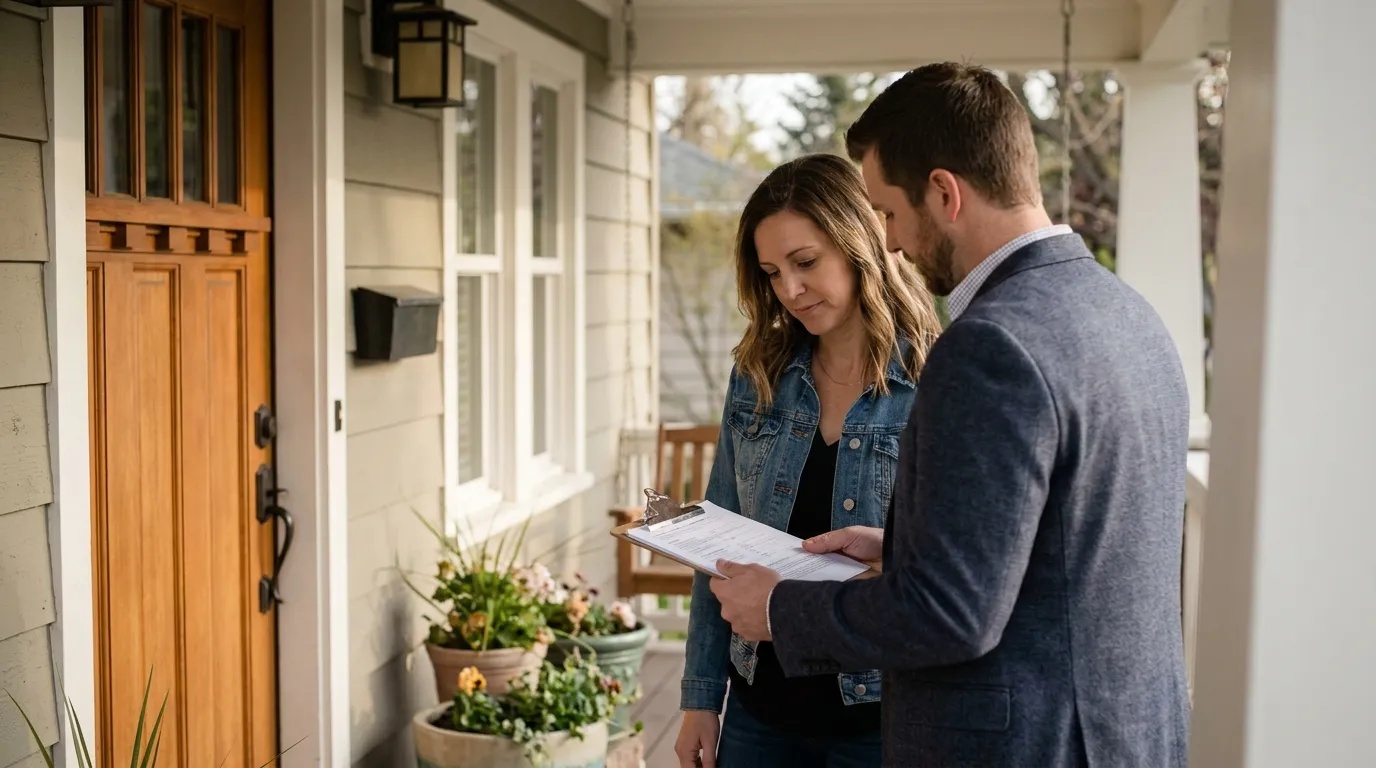
To establish a private civil cause of action under the CPA, a plaintiff must satisfy a five-part test established by the Washington Supreme Court: an unfair or deceptive act or practice, occurring in trade or commerce, impacting the public interest, causing injury to the plaintiff's business or property, and a causal link between the deceptive act and the injury suffered. In real estate, unfair acts typically involve material omissions, false claims regarding property conditions, or misleading promises regarding financing or zoning capabilities.
Treble Damages and Attorney Fees: Why This Matters
The financial stakes under the Washington Consumer Protection Act are significantly higher than standard breach of contract or negligence lawsuits. The statute empowers courts to award prevailing plaintiffs actual damages, full court costs, and reasonable attorney fees. This fee-shifting provision makes CPA litigation particularly attractive to aggrieved buyers and sellers, as legal fees often surpass the monetary value of the underlying dispute.
Furthermore, under RCW 19.86.090, the court possesses the discretion to award treble damages—tripling the actual damages sustained by the plaintiff, up to a statutory maximum for exemplary damages. Because statutory liability under the CPA can escalate rapidly, real estate brokers must implement strict disclosure habits and verification procedures to insulate their business from exposure.
Advertising and Representation Claims Under the CPA
Marketing and property advertising represent primary areas of vulnerability under the CPA. Statements made in the Multiple Listing Service (MLS), social media marketing, print brochures, and verbal representations during open houses fall directly within the scope of "trade or commerce." Brokers must ensure that all property features, square footage measurements, lot boundaries, and HOA assessments are verified and accurately presented.
Common advertising pitfalls under the CPA include:
- Unverified Square Footage: Representing inaccurate living area estimates without citing the official source or disclosing that measurements are approximate.
- Misleading Property Boundaries: Assuring a buyer that a fence line represents the actual legal property boundary without reviewing a recorded survey.
- Omitted Material Defects: Concealing known structural, environmental, or drainage issues to keep a transaction on track.
- Unauthorized Zoning Claims: Stating that a parcel can be subdivided or converted to multi-family use without confirming local municipal codes.
Proper disclosures and clear, accurate representation are vital to protecting consumers and maintaining your license. Licensees can review full regulatory updates directly on the Washington State Department of Licensing website.
Case Examples Involving Real Estate Brokers
Washington courts have addressed the application of the CPA to real estate transactions in numerous milestone cases. A frequent scenario involves a broker failing to pass along critical information regarding latent defects. For instance, if a listing broker possesses a prior professional inspection report identifying a faulty foundation or active roof leak but fails to disclose it to prospective buyers, the buyer may allege an unfair or deceptive act under the CPA following closing.
In another common scenario, dual agency or unrepresented buyer situations can increase risk. When a broker acts as a dual agent or works directly with an unrepresented buyer, making definitive oral assertions about local permit compliance or rental income potential without verification can lead directly to CPA liability if those assertions prove false and cause financial injury to the buyer.
Essential Compliance Habits for Real Estate Brokers
Mitigating risk under the Washington Consumer Protection Act requires consistent, professional business practices across every transaction. Establishing clear protocol for documentation, communication, and disclosure shields brokers from deceptive practice allegations.
Key compliance habits include:
- Document Everything in Writing: Retain written records of all property disclosures, inspection reports, buyer inquiries, and written recommendations to seek professional advice.
- Attribute Information Sources: When providing property statistics, square footage, or tax data, clearly state the source (e.g., "per county tax records") rather than stating unverified numbers as absolute facts.
- Recommend Professional Inspections: Advise clients in writing to hire licensed inspectors, land surveyors, structural engineers, or tax specialists for technical evaluations.
- Complete Mandatory Education: Stay current with Washington real estate laws, agency rules, and legal updates by completing comprehensive continuing education coursework.
If you are approaching your initial two-year renewal deadline, fulfilling your complete educational requirements with a approved provider is essential. Enrolling in the Washington 90-Hour First Renewal Package ensures you receive mandatory coursework—including Advanced Practices, Real Estate Law, and the Core course—designed to keep your practice compliant and protected.
Frequently Asked Questions
Does the Washington Consumer Protection Act require proof of intent?
No. Under the Washington Consumer Protection Act, a plaintiff does not necessarily need to prove that a broker intended to deceive. It is sufficient to show that the broker's action or statement had the capacity or tendency to deceive a substantial portion of the purchasing public and resulted in financial injury.
Can a home buyer sue both the seller and the listing broker under the CPA?
Yes. If both the seller and the listing broker engaged in deceptive acts—such as actively concealing known material defects or distributing misleading representations—a buyer may name both parties in a civil lawsuit under RCW 19.86.
How does the CPA differ from standard real estate license law?
Real estate licensing laws (RCW 18.85 and RCW 18.86) are regulatory statutes enforced primarily by the Washington Department of Licensing through administrative actions, license suspension, or fines. The CPA is a civil statute that allows private citizens to sue in court for monetary damages, treble damages, and attorney fees.
What CE courses are required for a broker's first renewal in Washington?
Per the Washington Department of Licensing, first-time renewing brokers must complete 90 total clock hours of approved education. This includes the 30-hour Advanced Practices course, the 30-hour Real Estate Law course, the mandatory 3-hour Current Issues in WA Real Estate (Core) course, and additional elective hours. Always verify your specific license status and deadlines at dol.wa.gov.