Vacant Land Transactions in Washington: A Guide for Real Estate Brokers
Representing clients in vacant land transactions requires a specialized skill set that goes far beyond traditional residential sales. In the Pacific Northwest, a washington vacant land real estate broker must navigate complex environmental regulations, zoning restrictions, and infrastructure challenges. Whether your client wants to build a custom home overlooking Puget Sound or invest in acreage in Eastern Washington, understanding the unique nuances of raw land is critical to protecting your clients and your real estate license.

As you work with buyers and sellers of undeveloped acreage, you will quickly realize that raw land transactions carry a higher level of risk. Missing a critical detail regarding water rights, soil quality, or access easements can lead to costly litigation and transaction failures. For brokers completing their first renewal cycle, mastering these concepts is not just about closing deals—it is also a key part of your professional development. To ensure you meet all state requirements, you can complete your mandatory education with our comprehensive Washington 90-Hour First Renewal Package.

Feasibility Contingencies and Due Diligence
The feasibility contingency is the single most important protective clause in a vacant land purchase and sale agreement. Unlike a standard home inspection contingency, a land feasibility study allows the buyer a specified window of time—often 30 to 90 days—to investigate every aspect of the property to determine if it is suitable for their intended use. As a Washington broker, you must ensure this contingency is drafted with clear timelines and specific parameters.
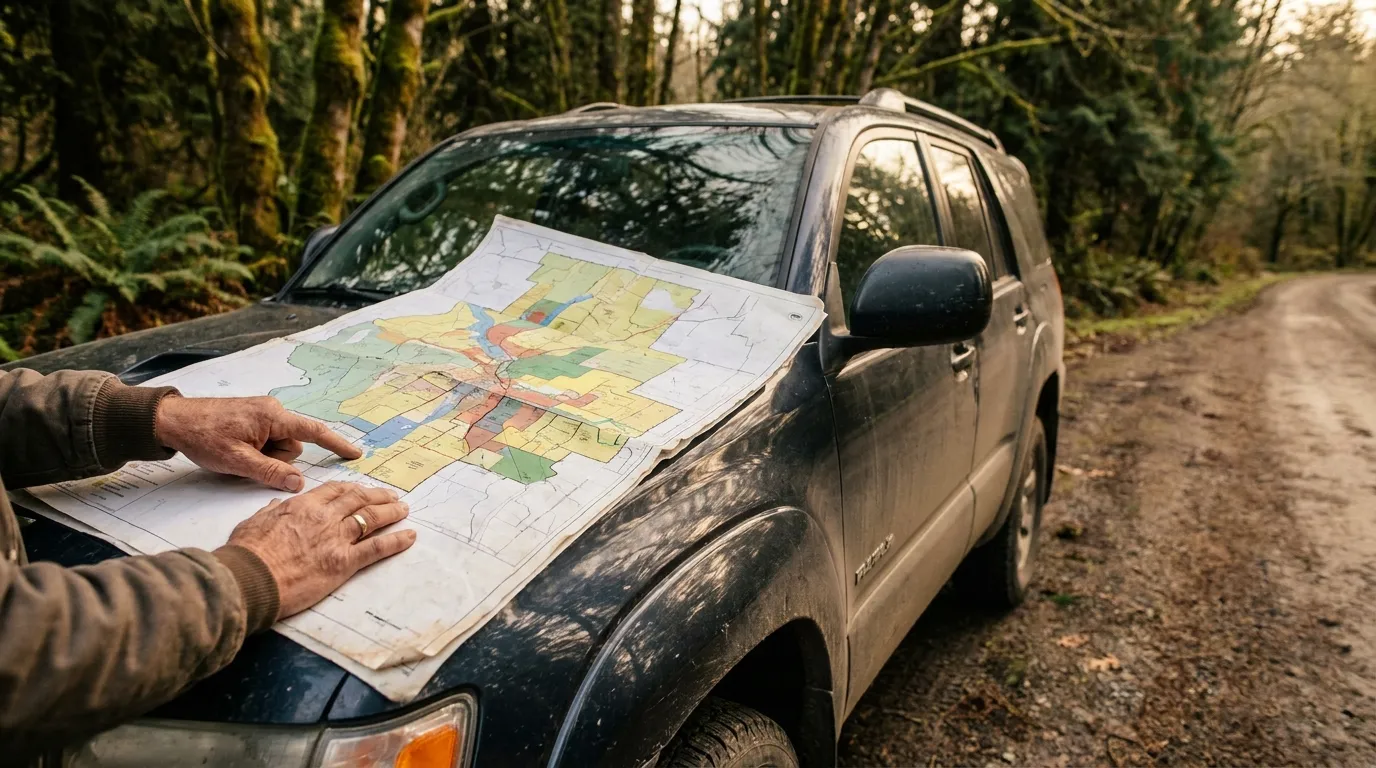
During the feasibility period, the buyer should investigate zoning classifications, critical area designations (such as wetlands or steep slopes), and local building setbacks. In Washington, local jurisdictions enforce strict Growth Management Act (GMA) guidelines that can severely restrict where and how a property can be developed. Brokers should advise clients to visit the local county or city planning department to verify that the property's zoning permits their desired build.
Perc Tests, Water, and Utilities
A beautiful piece of land is virtually worthless for residential development if it cannot access clean drinking water or safely dispose of wastewater. One of the first steps in land due diligence is verifying utility availability. If municipal sewer lines are not accessible, the buyer must perform a soil percolation (perc) test to determine if the ground can support an on-site septic system. A failed perc test can instantly halt a transaction.
Water access is another critical hurdle in Washington State. Buyers must determine if they can connect to a public water system, share a community well, or drill an individual well. Under Washington's "Hirst Decision" and subsequent legislation, drilling a new well requires proof of a legally and physically available water source. Brokers should always direct clients to the Washington State Department of Ecology to research water rights and basin closures before waiving water contingencies.
Boundary and Survey Issues
Never rely solely on county GIS maps or seller assertions regarding property boundaries. In vacant land transactions, boundary disputes are incredibly common. Overgrown vegetation, old fences, and natural landmarks can easily mislead buyers about the actual size and shape of the parcel they are purchasing.
Recommending a professional boundary survey is a best practice for any Washington vacant land real estate broker. A licensed surveyor will locate the exact property corners, identify any encroachments (such as a neighbor's shed or driveway crossing the property line), and map out existing easements. Easements are particularly critical, as they dictate who has the right to cross the land for access, utilities, or maintenance.
Financing Land
Financing raw land is significantly different from securing a traditional residential mortgage. Because undeveloped land is considered a higher-risk asset by financial institutions, traditional lenders often require larger down payments—frequently 20% to 50%—and charge higher interest rates with shorter amortization periods.
Brokers should familiarize themselves with specialized lending options, such as land loans, construction-to-permanent loans, and seller financing. Seller financing is a popular tool in vacant land transactions, allowing buyers and sellers to negotiate custom terms, interest rates, and payment schedules. When utilizing seller financing, always advise your clients to have a qualified real estate attorney draft or review the promissory note and deed of trust.
Pricing Raw Land Without Comps
Determining the fair market value of raw land is one of the greatest challenges a broker will face. Unlike suburban subdivisions where identical homes sell regularly, vacant land parcels are highly unique. Two adjacent five-acre parcels can have vastly different values based on topography, timber value, views, and utility access.
To price raw land accurately, brokers must use the "development method" or look for comparable land sales within a broader geographic area over a longer timeframe. Factors that deduct from the value include the cost of clearing trees, bringing power to the property line, drilling a well, and building an access road. Understanding these cost variables allows you to help your clients make competitive, realistic offers.
Frequently Asked Questions
What is the Hirst Decision and how does it affect Washington land sales?
The Hirst Decision is a landmark Washington Supreme Court ruling that requires permit-exempt well users to prove that water is both physically and legally available without harming senior water rights. This means buyers cannot assume they can drill a well just because water is underground; they must verify local county water availability regulations first.
How long should a feasibility contingency be for vacant land?
While residential inspections typically take 10 to 15 days, a vacant land feasibility study usually requires 30 to 90 days. This extended timeframe is necessary to coordinate soil engineers, surveyors, county planners, and utility companies, all of whom may have backlogs.
Can a buyer build on land designated as a critical area in Washington?
Critical areas—which include wetlands, fish and wildlife habitat conservation areas, and geologically hazardous areas—are heavily protected under Washington's Growth Management Act. Building in these areas is either strictly prohibited or requires expensive mitigation plans and specialized permits. Always verify critical area maps with the local county planning department.
Complete Your Washington First Renewal with GetMeRenewed
Navigating the complexities of vacant land transactions is just one of the many advanced skills you will develop throughout your real estate career. For brokers approaching their first active license renewal, the Washington Department of Licensing (DOL) requires specific continuing education courses to maintain your active status. You can verify all current licensing rules and deadlines directly on the Washington State Department of Licensing website.
At GetMeRenewed, we make it simple to fulfill your state-mandated hours with high-quality, mobile-friendly education designed specifically for Washington brokers. Protect your license, expand your expertise, and prepare for your next big transaction by enrolling in our comprehensive Washington 90-Hour First Renewal Package today.