Escalation Clauses in Washington Real Estate: How They Work and When They Backfire
In highly competitive housing markets across Washington, buyers frequently look for ways to make their offers stand out without immediately bidding their absolute maximum price. This is where the escalation clause comes into play. When used correctly, an escalation clause washington real estate addendum can help a buyer secure a property by automatically outbidding competing offers up to a pre-determined limit. However, these clauses are complex legal tools that carry significant risks for both buyers and sellers if handled incorrectly.
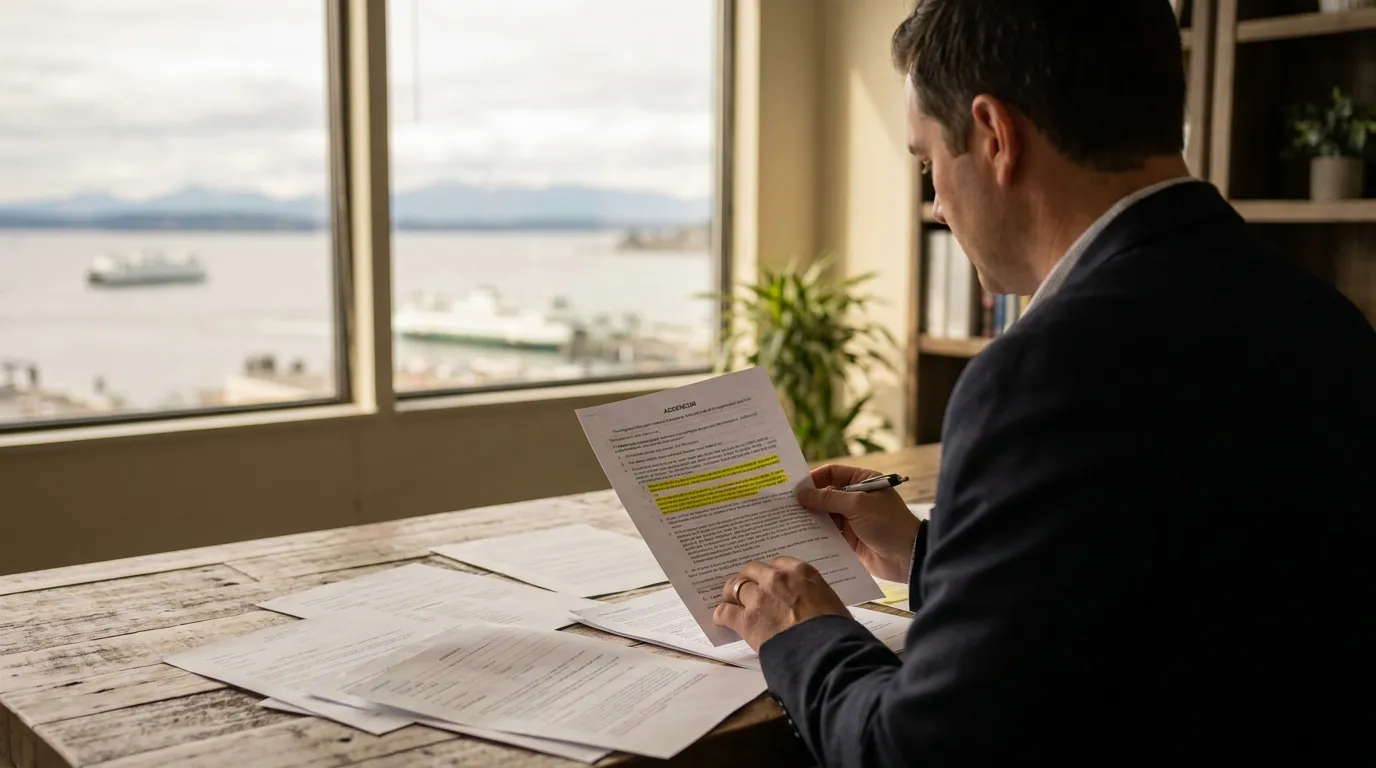
As a licensed real estate professional, understanding the mechanics, legal implications, and potential pitfalls of escalation clauses is essential for protecting your clients and your license. This guide breaks down how these clauses operate under Washington practice, how to handle them on both the buying and selling sides, and when it is best to advise your clients to avoid them altogether. For a complete breakdown of transaction forms and legal guidelines, you can verify current rules and licensing standards directly on the Washington State Department of Licensing website.

Anatomy of an Escalation Clause
An escalation clause is an addendum attached to a purchase and sale agreement. It typically consists of three core components that work together to dictate how the purchase price will adjust in the face of competition. Understanding these components is critical to drafting an enforceable and clear agreement.

The first component is the base offer price. This is the initial amount the buyer is offering to pay for the property in the absence of any competing bids. The second component is the escalation increment, which is the specific amount by which the buyer's offer will exceed the next highest bona fide competing offer. For example, a buyer might state they will pay $5,000 more than any other valid offer. The third and final component is the maximum cap. This is the absolute ceiling the buyer is willing to pay for the home. If competing offers push the price beyond this cap, the escalation clause becomes inactive, and the buyer's offer remains at their maximum cap.
Proof of the Competing Offer
To prevent fraud and ensure transparency, a buyer's escalation clause should never be triggered blindly. In Washington real estate transactions, the seller must provide documented proof of the competing offer that triggered the escalation. This is typically done by delivering a complete copy of the competing offer to the escalating buyer along with the seller's counteroffer or acceptance.
The competing offer must be "bona fide," meaning it is a legitimate, enforceable offer from a qualified buyer made in good faith. Listing brokers must be incredibly careful when handling these documents. Personal identifying information of the competing buyer, such as their name, current address, and contact details, should be redacted to protect privacy, but the essential terms—such as price, financing terms, and closing date—must remain visible to prove the escalation was justified.
Appraisal Interaction
One of the most common ways an escalation clause backfires is during the appraisal process. When a buyer escalates their purchase price significantly above the original listing price, there is a strong possibility that the home will not appraise for the new, escalated contract price. This creates an appraisal gap that must be resolved before closing.
If the buyer is utilizing conventional financing and has an appraisal contingency, a low appraisal gives them the right to renegotiate or terminate the contract. However, if the buyer waived their appraisal contingency or agreed to cover any appraisal gap to make their offer more competitive, they are legally obligated to bring the difference to the closing table in cash. Real estate brokers must ensure their buyers fully understand the financial implications of escalating a price beyond fair market value, especially when cash reserves are limited.
Seller-Side Handling
From the seller's perspective, receiving multiple offers with escalation clauses requires careful strategy and meticulous organization. Sellers are not obligated to accept or even respond to an escalation clause. In fact, a seller can choose to reject the escalation format entirely and issue a multiple-counteroffer asking all parties for their "highest and best" terms.
If a seller decides to accept an offer with an escalation clause, the listing broker must carefully calculate the final purchase price based on the competing offers. The listing broker must ensure that the competing offer used to trigger the escalation is fully executed and contains no terms that would invalidate it. Furthermore, if multiple offers contain escalation clauses, the math can become incredibly complex. Listing brokers must systematically compare the caps and increments to determine the true highest net offer for the seller.
When to Advise Against an Escalation Clause
While escalation clauses are powerful, they are not suitable for every transaction. There are several scenarios where a real estate broker should advise their client against using one. For buyers, using an escalation clause immediately reveals their maximum budget to the seller. If the seller knows the buyer is willing to pay up to a certain cap, they may simply reject the escalation and counteroffer at the buyer's maximum cap, eliminating the buyer's negotiating leverage.
Additionally, in a market where homes are sitting longer or when there is no clear evidence of multiple offers, submitting an escalation clause can signal desperation. For sellers, accepting an escalated offer with a massive appraisal gap and a weak financing contingency can lead to a failed transaction weeks into escrow. Brokers must weigh the strength of the entire offer—including down payment, contingencies, and closing timeline—rather than focusing solely on the escalated price.
Frequently Asked Questions
Can a seller trigger an escalation clause with their own counteroffer?
No. An escalation clause can only be triggered by a genuine, bona fide competing offer from another prospective buyer. A seller cannot simply demand a higher price using the escalation addendum without presenting a qualifying competing offer that meets the criteria outlined in the addendum.
What happens if two offers have escalation clauses?
When multiple offers contain escalation clauses, the listing broker must calculate the escalation of both offers side-by-side. The offer with the lower cap will escalate to its maximum limit, which then triggers the other offer to escalate one increment above that maximum cap, provided the second offer's cap is higher. This process requires precise math and careful documentation.
Is a redacted copy of the competing offer legally required in Washington?
Yes, standard Washington real estate forms require the seller to provide a copy of the competing offer to the buyer to validate the price increase. Redacting personal information is standard practice to protect the privacy of the unsuccessful bidder while still proving the legitimacy of the competing terms.
Master Your First Washington Renewal with GetMeRenewed
Navigating complex contractual tools like the escalation clause requires a deep, up-to-date understanding of Washington real estate law and guidelines. If you are approaching your first active license renewal, the Washington Department of Licensing requires a specific set of continuing education courses to maintain your license in good standing.
At GetMeRenewed, we make completing your education straightforward and stress-free. Our comprehensive Washington 90-Hour First Renewal Package is designed specifically to meet all state requirements, including the mandatory Advanced Practices and Core courses. Gain the practical knowledge you need to protect your clients and elevate your career. Enroll in your Washington First Renewal course package today and complete your hours at your own pace.