Assistance Animals vs. Pets: What Washington Brokers Must Get Right
Navigating the complex landscape of fair housing laws is one of the most critical responsibilities for real estate professionals in Washington State. When dealing with residential property management, lease negotiations, or property sales, brokers frequently encounter requests regarding assistance animals. Mistaking an assistance animal for a standard pet is not merely a customer service misstep—it can lead to serious legal consequences under state and federal anti-discrimination laws.
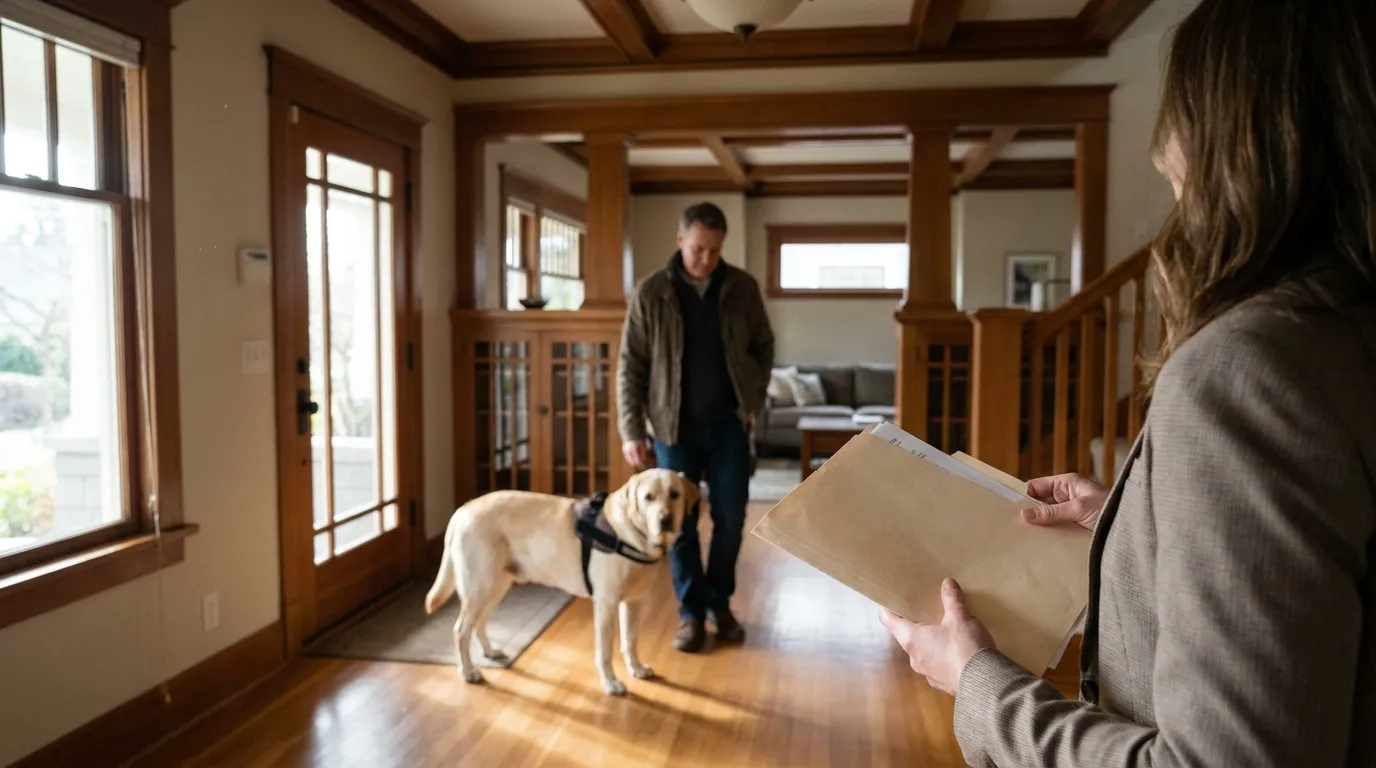
Understanding the statutory requirements surrounding assistance animals ensures you protect your clients, your firm, and your real estate license. Both federal fair housing guidelines and the Washington State Law Against Discrimination (WSLAD) set strict guidelines on how real estate licensees and housing providers must handle these requests. To verify official state statutes and licensing regulations, always consult the Washington Department of Licensing.

The Legal Distinction Between Assistance Animals and Pets
Under federal and state law, an assistance animal is not a pet. This distinction is the foundation of fair housing compliance. Assistance animals are classified broadly into two primary categories: service animals and emotional support animals (ESAs). Service animals are typically dogs (and in some cases, miniature horses) individually trained to do work or perform tasks for the benefit of an individual with a disability. Emotional support animals provide necessary emotional support that alleviates one or more identified symptoms or effects of a person's disability.

Because assistance animals are legally recognized as reasonable accommodations, standard lease rules regarding pets do not apply. A housing provider cannot charge pet fees, pet deposits, or pet rent for an assistance animal. Furthermore, breed, size, and weight restrictions enforced by a property owner or homeowners association generally cannot be used to deny an assistance animal, unless a specific animal poses a direct threat to safety or physical property that cannot be mitigated.
What You May Ask and What You May Not Ask
When a prospective buyer or tenant requests an accommodation for an assistance animal, Washington brokers must follow strict inquiry boundaries. If the disability and the need for the animal are obvious, no inquiries or documentation may be requested. If the disability or the need is not obvious, a broker or property owner may only ask two specific questions:
- Is the animal required because of a disability?
- What work, task, or support does the animal provide?
Brokers must never demand medical records, ask for detailed information about the individual's specific medical diagnosis, or require the applicant to demonstrate the animal's training or abilities. Intrusive inquiries violate fair housing regulations and expose brokers to regulatory complaints and litigation.
Documentation Standards for Reasonable Accommodations
When a disability-related need for an assistance animal is not readily apparent, housing providers are entitled to request reliable documentation verifying the need. Per guidance from the U.S. Department of Housing and Urban Development (HUD) and the Washington State Human Rights Commission, reliable documentation generally comes from a qualified healthcare professional, such as a doctor, therapist, counselor, or social worker who has an established professional relationship with the individual.
Brokers should exercise caution regarding generic online certificates or registration badges purchased from commercial websites. HUD guidance explicitly notes that online registrations or certificates purchased for a fee are generally not sufficient on their own to establish a legitimate disability-related need. However, rather than issuing an immediate denial, brokers should advise property owners to request legitimate verification from the applicant's healthcare provider.
Advising Landlord Clients to Prevent Fair Housing Violations
Property owners frequently push back against assistance animal requests due to concerns over property damage, noise, or existing "no-pet" policies. As a Washington real estate broker, your obligation is to guide landlord clients away from illegal practices while protecting their legitimate legal rights.
Landlords may not issue blanket denials based on an animal's breed or physical size. However, an accommodation request may be lawfully denied under narrow circumstances: if granting the accommodation creates an undue financial and administrative burden, fundamentally alters the nature of the housing provider's operations, or if the specific individual animal poses a direct threat to the health and safety of others that cannot be reduced by another reasonable accommodation. Remind landlord clients that while pet deposits are illegal for assistance animals, tenants remain financially responsible for any actual damage the animal causes to the dwelling.
Practical Complaint-Avoidance Scripts for Brokers
Maintaining professional, scripted language helps prevent inadvertent fair housing violations during phone calls or client showings. Clear, standardized responses ensure equal treatment for all applicants.
When a landlord client says, "I don't allow dogs over 25 pounds in my rental," you can respond: "Under Washington and federal fair housing laws, assistance animals are legally distinct from pets and are exempt from weight or breed limits. Let's review the standard reasonable accommodation process to ensure we evaluate this request in compliance with state regulations."
When an applicant asks about pet fees for an emotional support animal, respond: "Our property policy follows fair housing guidelines. Assistance animals do not require pet fees or pet deposits, though applicants complete a standard verification process for non-obvious accommodations."
Frequently Asked Questions
Can a landlord charge an extra security deposit for an assistance animal in Washington?
No. Landlords cannot charge extra pet deposits, application fees, or monthly pet rent for an assistance animal. However, the tenant remains legally responsible for repairing any actual damage the animal causes during the tenancy.
Are emotional support animals recognized under Washington rental law?
Yes. Both the federal Fair Housing Act and the Washington State Law Against Discrimination recognize emotional support animals as reasonable accommodations in residential housing, provided the disability-related need is verified.
What should a broker do if an assistance animal causes a nuisance?
Fair housing protections do not excuse destructive or aggressive behavior. If an assistance animal causes ongoing property destruction, creates severe noise disturbances, or shows aggressive behavior, the landlord may follow standard lease enforcement and legal notices, regardless of the animal's status.
How GetMeRenewed Helps You Stay Compliant
Mastering fair housing guidelines, agency disclosures, and rental laws is essential for maintaining a successful real estate career in Washington. If you are preparing to complete your mandatory continuing education for your initial renewal, enrolling in the comprehensive Washington 90-Hour First Renewal Package gives you the exact coursework needed to meet all state DOL requirements.
Stay ahead of regulatory changes and protect your business with intuitive, self-paced online instruction designed specifically for Washington licensees. Secure your professional education today by completing your Washington First Renewal enrollment through GetMeRenewed.