The Eight Core Topic Areas in New Jersey Real Estate CE
Maintaining an active real estate license in the Garden State requires a commitment to ongoing professional development. The New Jersey Real Estate Commission (REC), a division of the Department of Banking and Insurance, mandates that all individual salespersons, broker-salespersons, and brokers complete a specific curriculum of continuing education (CE) during each two-year licensing cycle. Navigating these requirements is straightforward once you understand the structured framework established by the state.
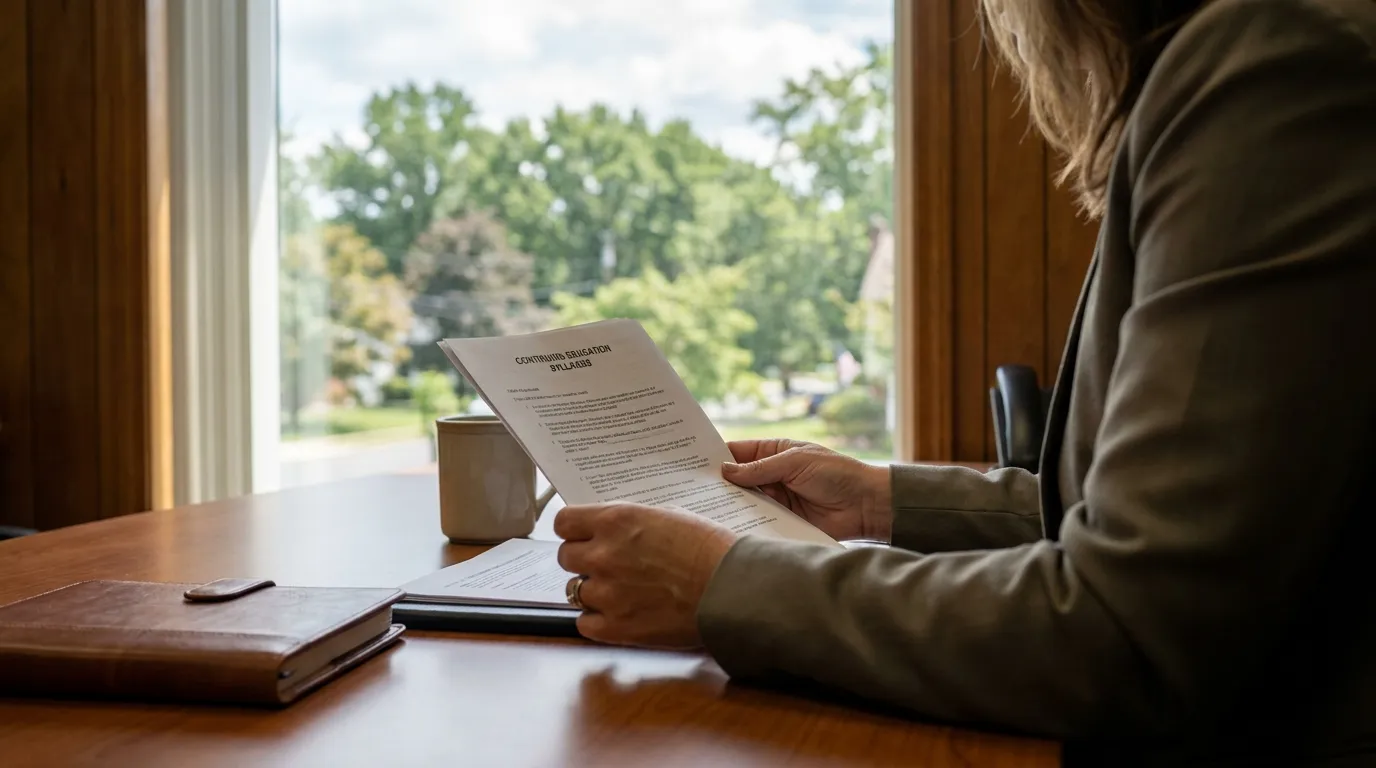
To help licensees maintain high standards of practice, the state organizes its mandatory education around a specific nj real estate ce core topics list. These core topics address critical areas of law, consumer protection, and professional conduct. Understanding these eight core areas not only ensures you remain compliant with state regulations but also equips you with the practical knowledge needed to protect your clients and your business. For official verification of licensing rules and deadlines, you can visit the New Jersey Real Estate Commission website.

Agency
The concept of agency is the foundation of the relationship between a real estate licensee and the public. This core topic area covers the legal obligations, fiduciary duties, and professional responsibilities that arise when representing buyers, sellers, landlords, and tenants in New Jersey.
Courses in this category focus on the distinct roles of seller's agents, buyer's agents, dual agents, and transaction brokers. Licensees review how agency relationships are created, disclosed, and terminated, ensuring that consumers are fully informed of who the broker represents in any given transaction.
Disclosure
Transparency is vital to the integrity of real estate transactions. The disclosure core topic area emphasizes the licensee's obligation to discover and disclose all material facts regarding a property's physical condition and any other factors that might affect a reasonable party's decision to buy or lease.
This includes understanding the proper use of the Seller's Property Condition Disclosure statement, identifying latent defects, and knowing when to recommend professional inspections. Proper disclosure protects consumers from unexpected issues and shields licensees from costly legal disputes.
Legal Issues, Including Attorney Review and Deed Restrictions
New Jersey real estate practice features several unique legal mechanisms that licensees must master. This core topic covers essential legal concepts, with a heavy emphasis on the mandatory three-day attorney review clause required in all broker-prepared contracts for sale.
Additionally, this section addresses deed restrictions, easements, covenants, and zoning ordinances. Understanding these legal limitations allows licensees to accurately advise clients on how a property can be used and what restrictions may impact its future value.
Ethics
Ethical conduct is the cornerstone of professionalism in real estate. The ethics core topic area explores the moral and professional standards expected of licensees when dealing with clients, customers, the public, and fellow industry professionals.
These courses typically cover the National Association of REALTORS® (NAR) Code of Ethics as well as general business ethics. Licensees analyze real-world scenarios to learn how to avoid conflicts of interest, handle competing offers fairly, and maintain the highest level of integrity in their daily practice.
Fair Housing and NJLAD
Ensuring equal access to housing is both a legal mandate and a professional duty. This critical core topic covers federal fair housing laws, including the Civil Rights Act of 1968 and the Americans with Disabilities Act (ADA).
Crucially, this section also focuses on the New Jersey Law Against Discrimination (NJLAD), which provides some of the most comprehensive civil rights protections in the nation. Licensees learn to recognize and prevent discriminatory practices in marketing, tenant screening, and property sales to ensure fair treatment for all protected classes.
The NJ Brokers and Salespersons Statute and Rules
To practice legally, licensees must operate within the boundaries established by state law. This topic area covers the specific statutes (N.J.S.A. 45:15) and administrative rules (N.J.A.C. 11:5) that govern real estate practice in New Jersey.
Courses in this category review licensing qualifications, advertising regulations, office supervision requirements for brokers, and the disciplinary process. Staying current on these rules helps licensees avoid administrative penalties and maintain their licenses in good standing.
NJ and Federal Environmental Law
Environmental regulations have a profound impact on real estate transactions in New Jersey. This core topic educates licensees on both federal and state-specific environmental laws that affect property ownership and development.
Key areas of study include the Industrial Site Recovery Act (ISRA), freshwater wetlands protection, coastal area development rules (CAFRA), lead-based paint hazards, radon mitigation, and underground storage tanks. Understanding these issues allows licensees to guide clients through necessary environmental due diligence.
Escrow Monies and Financial Recordkeeping
Fiduciary responsibility extends directly to the handling of client funds. This core topic area focuses on the strict rules governing the management of escrow accounts, trust accounts, and financial recordkeeping in New Jersey.
Licensees learn the proper procedures for accepting, depositing, and disbursing earnest money deposits and security deposits. This section also covers the severe penalties associated with commingling or mismanaging client funds, emphasizing the importance of meticulous financial tracking.
Which of These You Must Take vs. May Take
To renew an active license in New Jersey, licensees must complete a total of 12 continuing education hours during each two-year cycle. However, you cannot simply take any 12 hours of courses; the hours must be distributed according to specific category requirements set by the Real Estate Commission.
The 12-hour requirement is broken down as follows:
- Core Courses: At least 6 hours must be completed in "Core" topics. The eight core topic areas detailed above satisfy this requirement. Within these 6 hours, there are specific mandatory sub-categories.
- Fair Housing / NJLAD: You must complete at least 1 hour of Fair Housing/NJLAD education (this counts toward your 6 core hours).
- Ethics: You must complete at least 2 hours of Ethics education (this also counts toward your 6 core hours).
- Electives: The remaining 6 hours can be completed in either elective courses or additional core courses.
This structure ensures that while you have the flexibility to explore elective topics that interest you, you also receive essential training in the legal and ethical foundations of the profession. To make fulfilling these requirements simple and stress-free, you can enroll in our comprehensive New Jersey 12-Hour CE Renewal Package, which includes all your mandatory core, ethics, fair housing, and elective hours in one convenient online bundle.
Frequently Asked Questions
What is the deadline to complete my NJ real estate CE?
Continuing education must be completed by April 30 of every odd-numbered year to avoid a late processing fee. The actual license renewal deadline is June 30 of that same year, but completing your CE by the April 30 deadline ensures your renewal is processed on time without penalties.
Can I take all 12 hours of my NJ CE in core topics?
Yes. While the state requires a minimum of 6 core hours (including ethics and fair housing), you are permitted to take all 12 of your required hours in core topic areas if you choose. Elective hours are optional, but core hours are mandatory.
How do I check how many CE credits I have completed?
You can track your completed continuing education credits online through the PSI online CE tracking portal. Education providers report your completed hours directly to PSI, where you can log in to view your transcript and verify that you have met all renewal requirements.